Physics on Saturdays
22. 10. 2026In October of 2026 a group of students from Vector went to participate in the 2026 autumn school of physics at the Faculty of Mathematics and Physics in Ljubljana (FMF). For three Saturdays from 9 to 14:45, students came up with a hypothesis based on a research statement and performed experiments to try to prove/disprove their hypothesis. The research question given to students this year came from one of 17 IYPT (International Young Physicists Tournament) 2027 problem statements, and this was problem statement 3: ‘A hollow sphere contains a heavy ball and some viscous fluid. The rolling motion of such a sphere down an inclined plane is uneven and surprisingly slow. Explain and investigate this effect.’
On the first Saturday students were split into groups (students of Vector were placed in groups together, as this was a public event for other students from outside Vector) and came up with hypotheses upon this effect, such as ‘the viscosity of the fluid causes the ball to move slower’ or ‘the mass of the heavier ball inside the sphere causes it to move faster’, and designed experiments to prove/disprove these. Students chose dependent and independent variables, gathered the required apparatus and started testing. Additionally, on this first day, students were also given a lecture on different types of sensors available in the physics lab, such as an ultrasonic distance sensor, electronic force meter and so on. At the end of the day, students debriefed with other members of the school of physics to explain what they researched and what qualitative observations they could make.
On the second Saturday, students arrived at just before 09:00 and came up with game plans for the day. This could have been whether to continue gathering data, start analysing collected data and come up with more hypotheses. This went on for most of the day until students were given the opportunity to have another lecture with a nuclear physicist coming from the Facility for Antiproton and Ion Research (FAIR) in Germany, who also did research at the nuclear reactor of the Jožef Štefan Institute. He explained topics such as his role at these facilities and what was being researched. After this lecture, students went back to what they were doing prior to the said lecture and ended with a similar debrief as the first weekend.
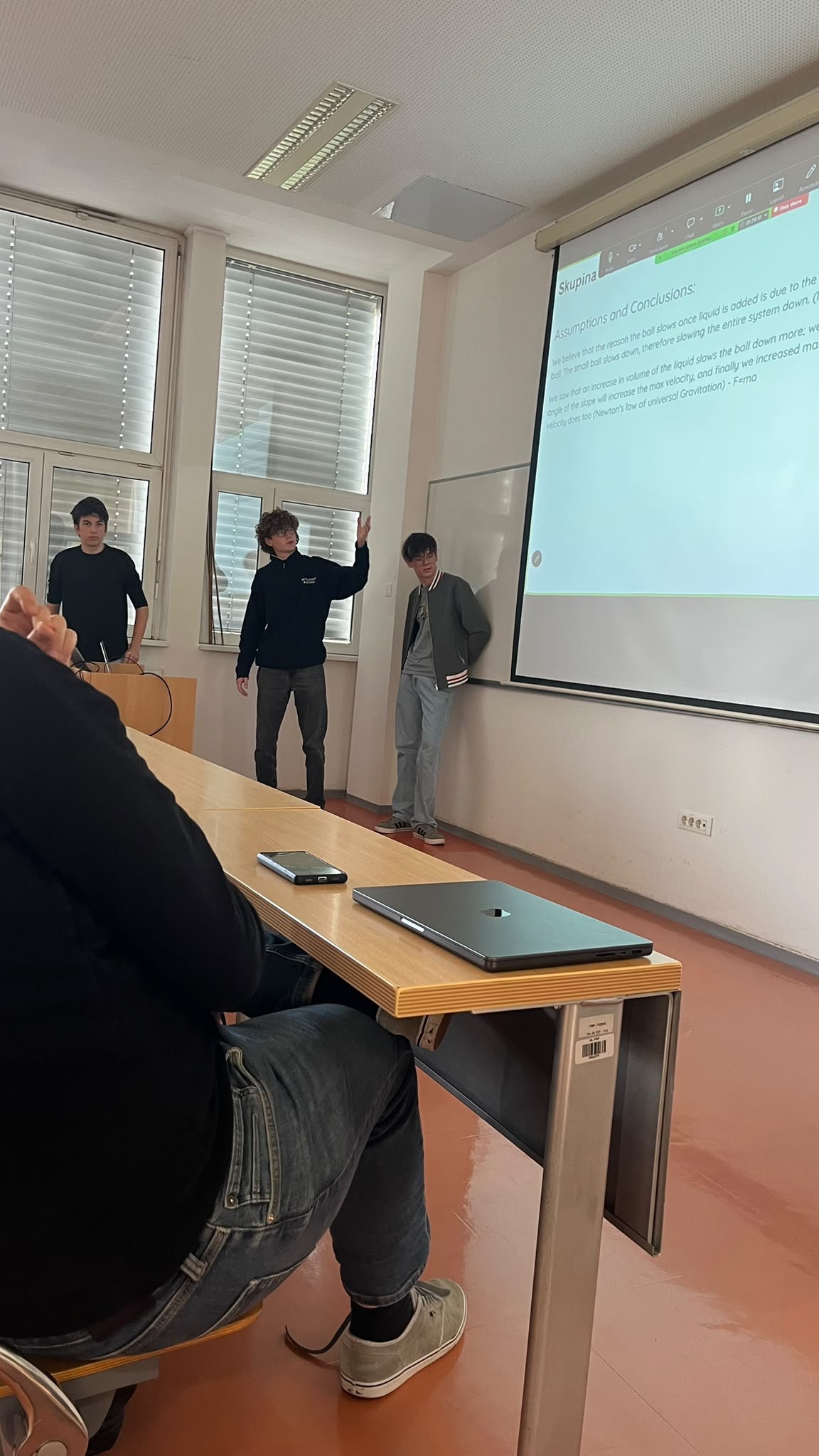
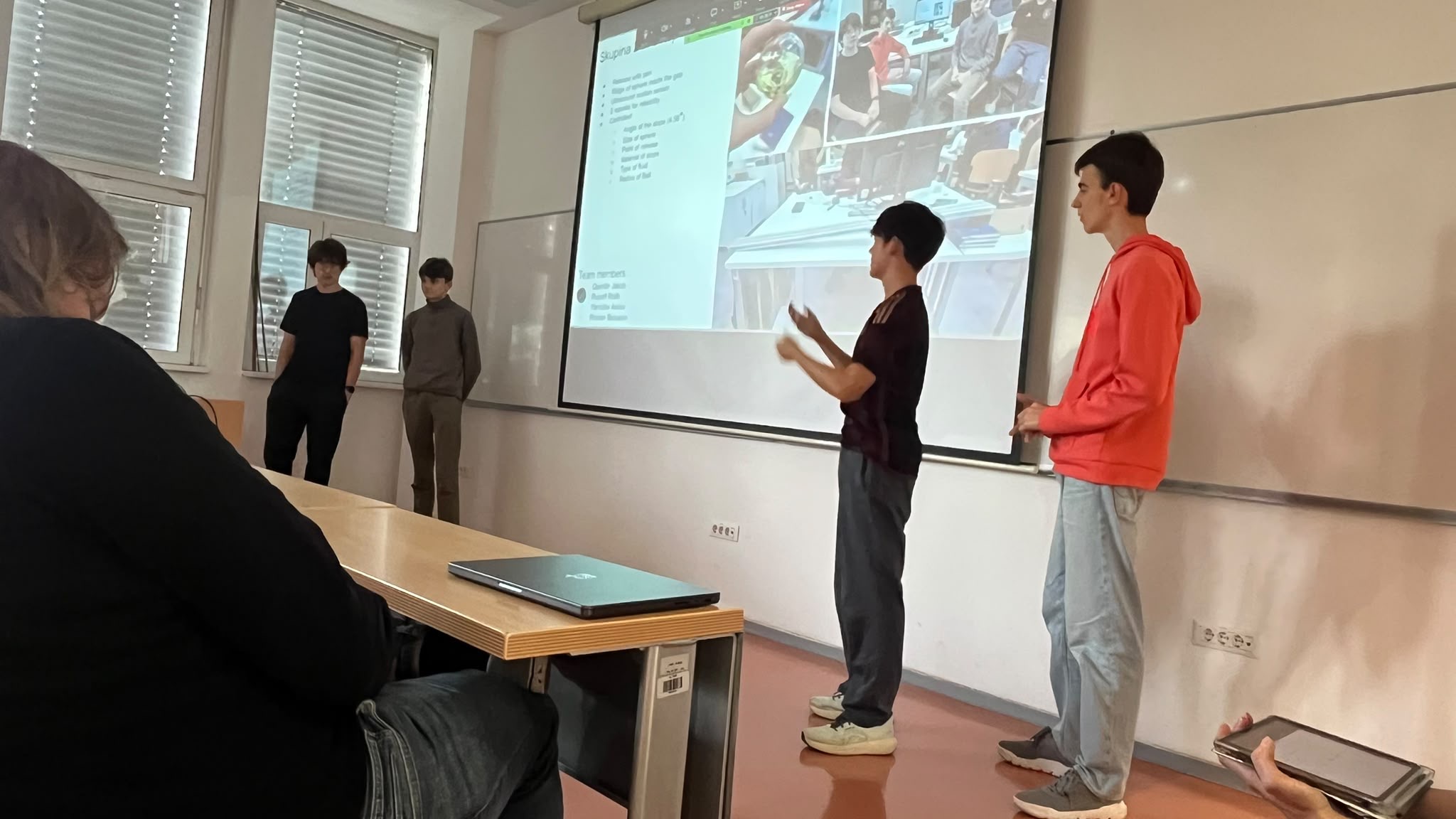
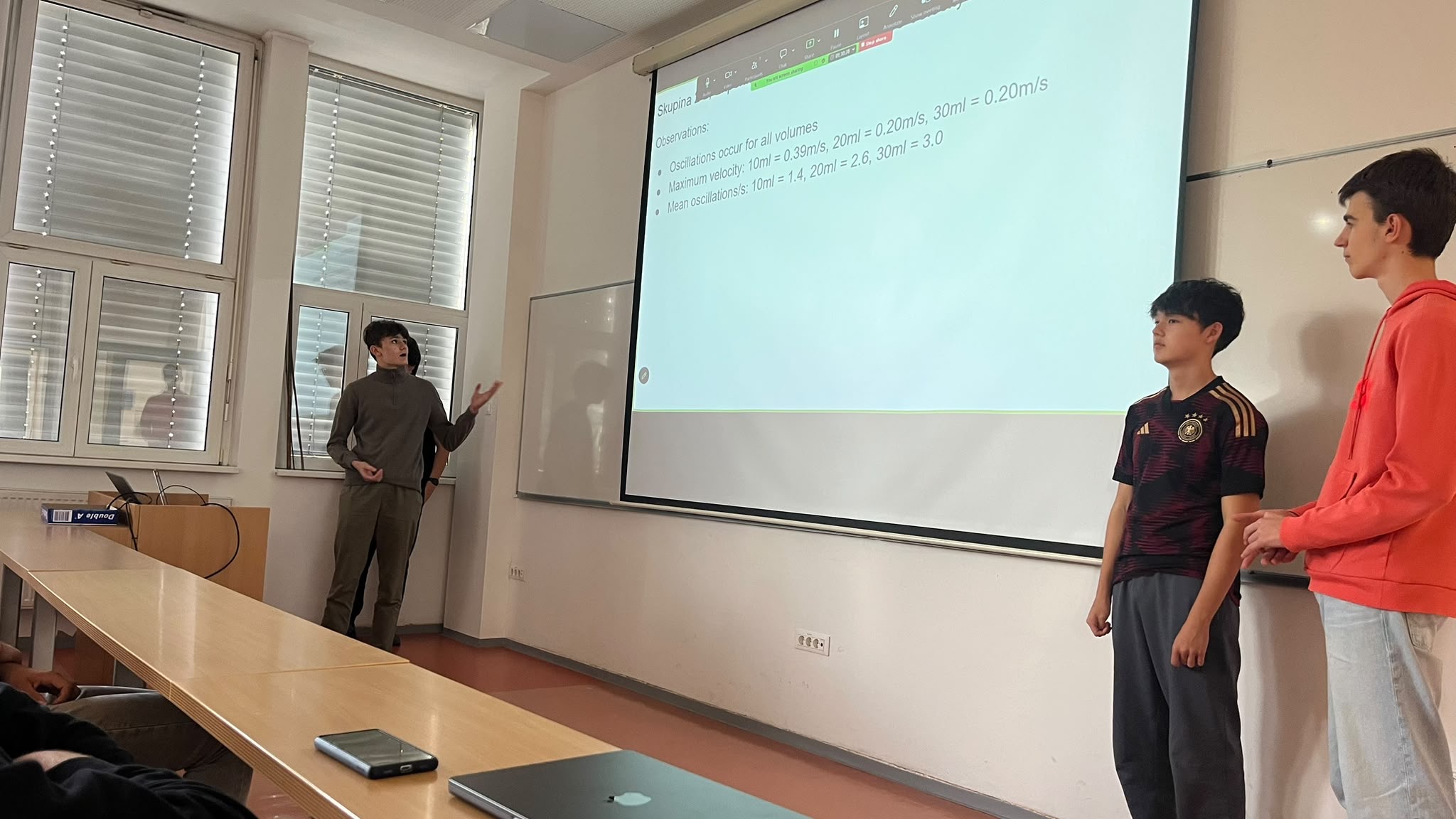
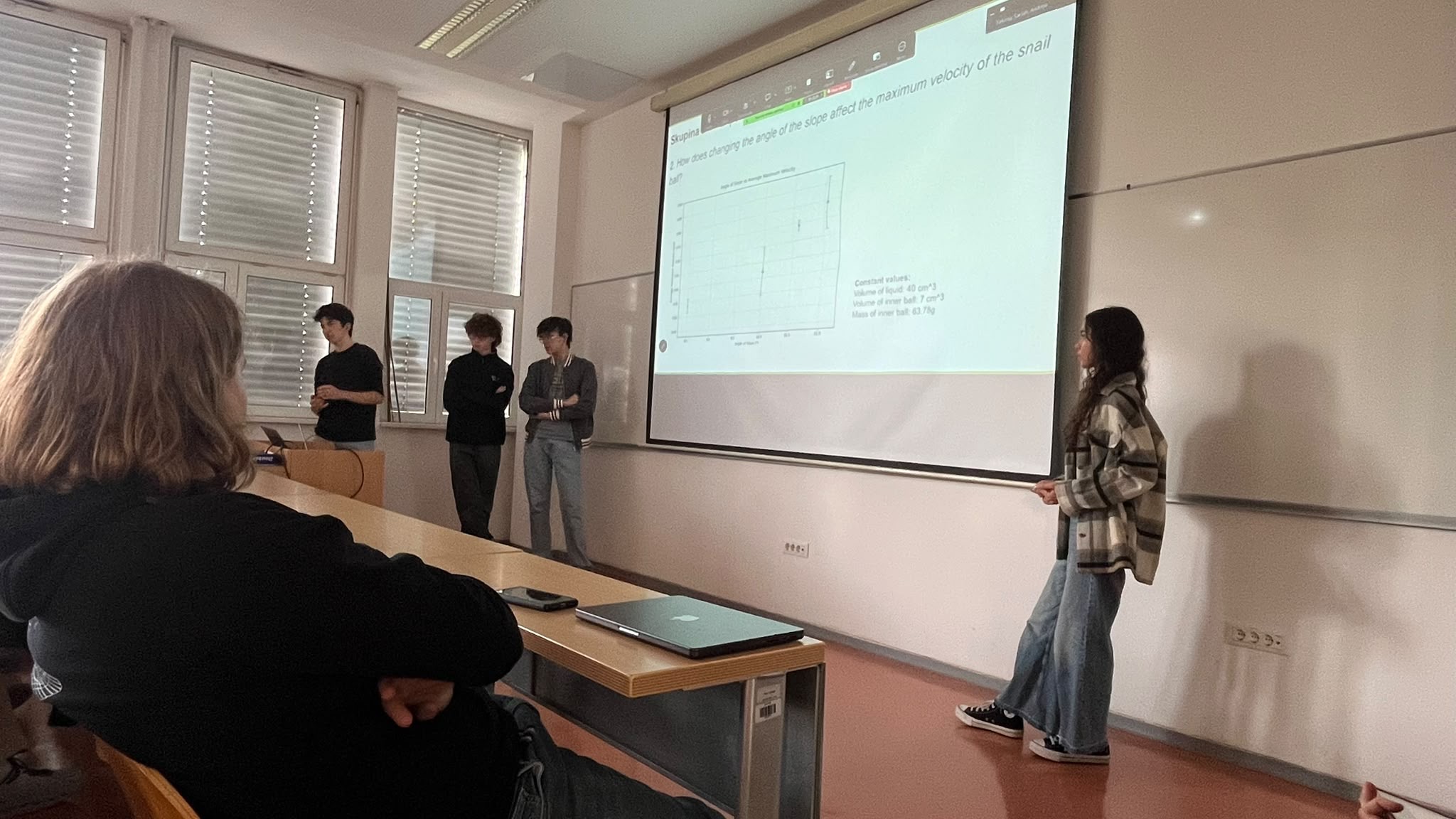
On the final day of the autumn school of physics, students were instructed to create a presentation that lasts 3-4 minutes upon what they researched, how they researched it and their discoveries. They still had time to finish any final data gathering and analysis prior. After the lunch break organised by the university for all three Saturdays, students gathered in a lecture hall and carried out their presentations to all other groups in the autumn school of physics and were given feedback. Once this was completed for all groups, the head organiser of the school gave a final statement and proposed an optional competition in ‘who could create the slowest snail ball’.
What stood out most to me as a participant of this year’s autumn school of physics was the liberty we were given on how to research our hypotheses and the support we were given from members of the faculty to make our methodology as efficient as possible and to teach us new ways upon approaching the designing phase of an experiment. I was also very pleased with the way we were treated and the generosity of the faculty.
To conclude, I found the autumn school of physics very interesting and useful for my studies in IB physics HL and for my own IYPT problem statement. I learned many things and look forward to having the chance to participate in this event next year.
– Louis, Year 12